
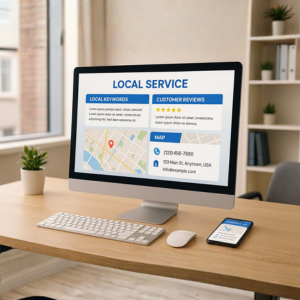
Best Practices to Turn Local Searches Into New Customers

If you’re a local business, your next customer is likely searching for your services online right now. Local web pages are key to capturing that ‘near me’ searches and new websites vistors to grow traffic and customers. Local web pages align your services with the exact locations people search in, increasing your search engine ranking power and driving high-intent customers to your site.

Why Local Searches Matter for Service Businesses – Key Takeaways:

  • Why they matter: 76% of mobile local searches lead to a purchase within 24 hours.
  • What they are: Pages like “Roof Repair in Dallas, TX” target specific services and locations.
  • AI-driven local SEO benefits: Improve rankings, drive qualified traffic, and boost conversions.
  • How to optimize: Use location-specific keywords, fast-loading pages, and mobile-friendly designs.
  • Technical must-haves: Structured data, clean URLs, and consistent business details (NAP).
By focusing on local SEO strategies, like detailed keyword targeting and user-friendly on-page content, you can turn local searches into real leads. Ready to get started? Let’s dive in.

Best Practices to Boost Local Rankings on Google In 2026

Keyword Targeting and On-Page Optimization

AI-driven SEO enhances local search performance by mapping your content to the real-world queries people nearby are making. When someone in Miami searches “emergency plumber Miami FL” or “AC repair near me,” AI helps ensure your pages match their intent and signal your local relevance—bringing you more ready-to-act customers.

How to Research Local Keywords

Start by identifying your core services (like HVAC repair or roof installation) and combine them with geographic terms such as city names, neighborhoods, or ZIP codes. For example, a Denver-based HVAC company might focus on phrases like “HVAC repair Denver CO”, “furnace repair in Denver”, or “AC installation 80202.”
The most effective local keywords combine high commercial intent with specific locations. Words like “emergency”, “24/7”, “same-day”, and “near me” indicate urgency. Pair these with your city or state for targeted results, such as “emergency dentist Brooklyn NY”, “same-day AC repair Austin TX”, or “24-hour locksmith Los Angeles CA.”
To find these keywords, use a mix of tools. Google Keyword Planner can show search volume and competition by city. Google Search Console reveals queries already driving traffic to your site. Google Autocomplete and People Also Ask sections highlight real questions and search variations. Platforms like SemrushAhrefsMoz, and BrightLocal provide deeper insights into local search trends and competitor strategies.
Here’s a simple workflow: enter a seed keyword like “plumbing repair” into a keyword tool, filter results by your city, and look for terms that include neighborhoods, specific services, or common problems. For instance, a Miami plumber might uncover phrases like “burst pipe repair Miami”, “toilet repair in Miami Florida”, or “24-hour plumbing Miami.” Organize these into primary keywords (e.g., “plumber Miami FL”) and secondary keywords (supporting terms like “emergency plumbing services Miami”).
Avoid creating separate pages for similar keywords to prevent them from competing against each other in search results. For example, instead of making individual pages for “plumber Miami FL”, “plumbing Miami FL”, and “plumbing services Miami FL”, focus on one page with a primary keyword and incorporate related terms naturally into headings and body text.
For “near me” searches, optimizing for “service + city + state” and using schema markup to define your service area will help capture local traffic. Once you’ve identified your keywords, weave them seamlessly into your page elements, or bring on a AI SEO partner to do the hard work for you.
Key Elements of a High-Converting Local Service Page – On-Page SEO Best Practices
To help search engines and users understand your web page, integrate keywords naturally across critical on-page elements, don’t force them in. ‘Keyword stuffing’ is an old school tactic that simply does not work in 2026.
Title tags are the first thing users see in search results. Craft concise titles that include your primary keyword, city, and state (e.g., “Emergency Plumbing in Miami, FL | 24/7 Service”). Keep them under 60 characters to ensure they display fully on mobile devices.
Meta descriptions may not directly affect rankings, but they can make or break your click-through rate. Write a unique description for each service page that includes your keyword, location, and a call-to-action. For example: “Need emergency plumbing in Miami, FL? We’re available 24/7 for burst pipes, water heaters, and drain clogs. Call (305) 555-1234 now!”
H1 headings should clearly state the service and location, like “Emergency Plumbing Services in Miami, FL.” Use your primary keyword in the H1, but vary other headings (H2s and H3s) to cover related topics, such as “Burst Pipe Repair in Miami” or “Serving Coral Gables and Downtown Miami.”
URL structures should be simple and descriptive. Use lowercase letters, hyphens to separate words, and include the service and location: /services/hvac-repair/miami-fl/.
Body copy is where you connect with users. Begin with a short, keyword-rich introduction that addresses the user’s problem: “When you need emergency plumbing in Miami, FL, you can’t afford to wait. Our licensed plumbers are available 24/7 to handle burst pipes, water heaters, and more across Miami-Dade County.” Use scannable sections to explain your services, highlight your expertise, and mention local details like neighborhoods or common regional issues (e.g., hurricane prep in Florida or frozen pipes in colder states).
Image optimization is crucial for both speed and SEO. Name images descriptively with local context, like water-heater-replacement-seattle-wa.jpg instead of generic filenames. Use alt text to describe images and reinforce location: “Technician performing water heater replacement in Seattle, WA.” Compress images for faster load times, especially on mobile.
Internal linking strengthens your site’s structure and helps users navigate. Link between location and service pages using descriptive text like “Learn more about furnace repair in Denver, CO” instead of generic phrases like “click here.” These links guide visitors while boosting your local SEO.
NAP details – Name, Address, Phone – should be consistent across your site and match your Google Business Profile. Display them prominently in the header, footer, or a dedicated contact section: “123 Main St, Denver, CO 80202 | (303) 555-1234 | Mon–Fri, 8:00 AM–5:00 PM MST.”

Optimization Tips for High-Impact Local Pages

To stand out, focus on features that enhance user experience – especially for mobile users who need quick answers and easy ways to contact you.
Click-to-call phone numbers make it easy for users to reach you instantly. Use tel: links so mobile visitors can tap to call: <a href="tel:+13035551234">(303) 555-1234</a>. Place these links prominently at the top of the page, in sticky headers, and next to calls-to-action.
Mobile-responsive design is essential. Your site should load quickly and display correctly on all devices. Use large, easy-to-tap buttons for calls and forms. Keep key details – like services, service areas, and contact info – visible without scrolling. Simplify forms to just a few fields (e.g., name, phone, ZIP code) to reduce friction and drive more conversions.
Localized trust signals help establish credibility. Use customer reviews with names and locations, like “Jessica M., Dallas, TX”, or “Mike R., Phoenix, AZ.” Display badges for licenses, certifications, and memberships in local or national organizations (e.g., Better Business Bureau or local trade groups). Highlight your experience with a section like “Why Miami Homeowners Trust Us” or “Serving Miami Since 2010”, and include specific details: “We’ve completed over 2,500 HVAC installations in the Phoenix area” or “Our Denver plumbers respond to emergencies within 60 minutes, even during snowstorms.”
These optimizations show both users and search engines that you’re a trusted, local expert.

How to Structure Local Service Pages

Organizing your local service page effectively is crucial for turning local searches into actual leads. A well-thought-out structure ensures visitors feel confident they’re in the right place, trust your business, and are motivated to take the next step. The most effective pages follow a logical flow: confirming the visitor’s location, showcasing your service area, building credibility, and making it easy for them to convert.
Start with an H1 that combines your service and location, like “Emergency Plumbing Services in Miami, FL.” This immediately tells visitors they’re in the right spot. Follow this with a short, compelling introduction that addresses their immediate need: “When your AC breaks down during a Phoenix heat wave, you need fast, reliable repair. We’re available 24/7 across the Phoenix metro area with same-day service and upfront pricing.”
Next, include a “Services We Offer in [City]” section. This is where you list your core services with brief explanations. For instance, a roofing company might mention “Storm Damage Repair”, “Roof Replacement”, and “Gutter Installation”, each with a sentence or two describing what’s included.
After that, add an “Areas We Serve” section to highlight your geographic reach. This not only supports searches like “service + city” or “service near me” but also reassures visitors that you operate in their area. Organize this information by region, such as “Dallas Metro”, “Fort Worth Area”, or “Arlington and Suburbs”, and include key neighborhoods and ZIP codes. Mention your service hours in local time (e.g., “7:00 AM–7:00 PM CST”) to align with user expectations and emphasize your local presence.

Creating Location-Specific Sections

Generic service pages often fail to rank well or convert effectively. To stand out, you need to speak directly to the unique conditions and challenges of your target area.
A “Common Problems in [City]” section can help you connect with local realities. For example, a Minneapolis plumber might focus on “Frozen Pipe Prevention and Repair During Minnesota Winters”, explaining how extreme cold impacts older homes and offering tips for emergency situations. Similarly, a Florida roofer could highlight “Hurricane-Related Roof Damage in Tampa Bay”, detailing common issues like wind and water damage and explaining how local building codes influence repairs.
Incorporate local context, such as weather patterns, housing styles, or regional regulations, and explain how your services address these specific challenges. For instance: “Phoenix homeowners often face AC failures during summer heat waves when temperatures soar above 110°F. Our technicians carry parts for the most common systems in Phoenix-area homes (built primarily in the 1990s and 2000s) and can complete most repairs in a single visit, even during peak demand.”
If your business serves multiple cities, avoid creating a flood of duplicate pages. Instead, use a shared template but customize 30–40% of each location section with city-specific details. Mention neighborhood names, typical home styles (“1950s bungalows in Pasadena” or “new-build subdivisions in Frisco”), and local scenarios. Add unique FAQs, testimonials, and project highlights for each city to ensure every section feels distinct without overwhelming your team or search engines.
For legal firms, consider a “How [State] Law Affects Your Case” section for each core service. Break down state-level nuances – like statute of limitations, fault rules, or custody standards – in plain language. Link to official state or federal resources for added credibility. Pair this with a “Local Court Experience” section that names nearby courts, outlines case timelines in those jurisdictions, and showcases relevant memberships or certifications. For instance: “Our family law attorneys frequently appear in Cook County Circuit Court, where we’ve helped over 300 families navigate Illinois’ specific parenting time guidelines since 2015.”
Home service businesses can emphasize regional expertise by referencing local building codes, inspection standards, or common home features. A Denver HVAC company might note: “Colorado’s high altitude affects furnace performance, and many Denver homes built before 1980 have undersized ductwork. We’re familiar with these challenges and can recommend upgrades that meet current Denver building codes while improving efficiency.” These details not only demonstrate your knowledge but also build trust with potential customers.

Building Trust With Local Proof Points

Trust is the linchpin of converting visitors into customers. U.S. users place heavy importance on reviews, ratings, and proof of past success in their area.
Local testimonials and case studies are a great way to establish credibility. Include the customer’s first name, city, and service type – like “Water heater replacement in Denver, CO” or “Personal injury case in Houston, TX.” Briefly describe the problem, the solution, and the outcome. For example: “Jessica M., Dallas, TX: ‘Our AC went out on a 105°F day. They arrived within 90 minutes, diagnosed a failed compressor, and had us back up and running by evening. Saved us from a miserable weekend.'”
Case studies can be formatted into easy-to-read blocks with headings like Problem, Location, Service Provided, and Result. For instance:
  • Problem: Burst pipe flooded basement during January freeze
  • Location: Minneapolis, MN
  • Service Provided: Emergency water extraction and pipe replacement
  • Result: Completed in 4 hours; homeowner’s insurance covered $8,500 of $9,200 total cost
For added impact, include before-and-after metrics, such as reduced energy bills or faster case resolutions.
The most effective trust signals include Google reviews with star ratings, embedded reviews from platforms like Thumbtack or HomeAdvisor, industry certifications, and “trusted by” logos from local organizations. Make sure to display testimonials with names and locations, include star ratings, and list your licenses and insurance details. Add a “Licensed, Insured, and Compliant in [State]” section that outlines license numbers, insurance coverage, and regulatory bodies. Follow this with a “Our Local Guarantees” block that spells out clear assurances, like response times or workmanship warranties, tailored to local standards and expectations.

Optimizing Layout for User Experience

Streamlined design and functionality are essential for U.S. users, who often browse quickly, especially on mobile devices. Use sticky or always-visible buttons for calls-to-action like “Call Now” or “Request Estimate.” Make navigation intuitive with clear section headings such as “Services in [City]”, “Areas We Serve”, and “Local Reviews.” Keep paragraphs short, use bullet points for service lists, and ensure key conversion elements – like phone numbers, forms, and pricing cues – are visible without requiring excessive scrolling.
ANINO LLC ensures your site is optimized for mobile performance and accurate local information, so visitors can quickly find what they need and connect with you hassle-free.

Technical Optimization for Local SEO

Behind every strong local ranking is a technically sound web page. And while content matters, AISEO strengthens the technical elements—from schema and URLs to speed and citations—so search engines know exactly how to rank your business for local searches. For U.S. service providers, this AI-enhanced precision is what drives consistent first-page visibility.

URL Structures and Schema Markup

Effective URL structures help both search engines and users understand what your page is about. For local service pages, a best practice is to include the service offered, the city, and the two-letter state abbreviation in a clean and consistent format, such as /service/city-state/. For instance, a Denver-based plumbing company might use /plumbing/denver-co/, while a roofing contractor in Austin could go with /roof-repair/austin-tx/. This approach keeps URLs short, clear, and easy to read.
Avoid cluttering URLs with unnecessary extras like dates, session IDs, or parameters. While ZIP codes can be useful for hyperlocal targeting, they’re better suited for on-page content or structured data rather than being part of the URL, where they can complicate readability and sharing. City names and state abbreviations generally provide enough geographic context.
Structured data is another critical piece of the puzzle. By using LocalBusiness schema, you can provide search engines with precise details about your business. This includes your business name, full U.S. postal address, and formatted phone number. Make sure to follow these guidelines for address formatting:
  • streetAddress: Street number and name
  • addressLocality: City
  • addressRegion: Two-letter state code (e.g., CA, NY, TX)
  • postalCode: Five-digit ZIP code (or ZIP+4 for added precision)
  • addressCountry: “US”

Your phone number should also follow the U.S. format (e.g., +1-555-123-4567).

For individual service pages, Service schema can specify details like serviceType, areaServed (cities or regions you cover), and provider (linking back to your LocalBusiness entity). Adding Review schema and FAQ Page markup can further enhance your visibility by enabling richer snippets in search results. These snippets might show your address, phone number, star ratings, and even price ranges in USD (e.g., “$75–$150”), which can boost your click-through rates by presenting useful and trustworthy information upfront.

For businesses operating in multiple cities, consistency is key. Use the same URL structure and schema template across all location pages, modifying only the city-specific details. This uniformity helps search engines better understand your site and makes navigation easier for users. These foundational practices set the stage for improving mobile performance and page speed, which are just as critical for local SEO.

Mobile and Page Speed Optimization

Technical performance is vital for local SEO, especially since more than half of local searches in the U.S. happen on mobile devices. These searches often occur while users are commuting, multitasking, or on the move. With Google’s mobile-first indexing, your site’s mobile version is what gets ranked, so poor mobile performance can cost you both rankings and conversions.
Start with responsive design. Your site should adapt seamlessly to U.S. smartphone screen sizes, ensuring that essential information – like phone numbers, addresses, service descriptions, and calls-to-action – is immediately visible without excessive scrolling. Features like tap-friendly buttons (e.g., “Call Now” with tel: links) make it easy for users to contact you with one tap.
Page speed is another critical factor. Slow-loading pages lead to higher bounce rates and signal to search engines that your site may not provide the best user experience. To improve load times:
  • Compress and optimize images (e.g., photos of service trucks, staff, or completed projects)
  • Enable browser caching and HTTP/2 to reduce latency
  • Minimize render-blocking JavaScript
  • Use a reliable U.S.-based hosting provider or CDN

Fast-loading pages ensure that even users on slower 4G connections can access key details like contact information and service descriptions without delay. This not only improves user experience but also increases the likelihood of conversions, such as calls and form submissions.

Maintaining NAP Consistency Across Platforms

Consistency in your Name, Address, and Phone number (NAP) across all platforms is essential for building local authority. Search engines cross-check this information on your website, Google Business Profile, major directories (like Yelp, Apple Maps, and Bing Places), and industry-specific listings to verify your business. Mismatched details can create confusion and weaken your local search presence.
To avoid this, establish a master NAP format and use it everywhere. For example:
“Smith Plumbing & Heating, 123 Main St, Denver, CO 80202, +1-303-555-1234.”
Be consistent with details like abbreviations (e.g., “Street” vs. “St.”) and phone number formatting (e.g., using hyphens or parentheses). Apply this format to your website’s header, footer, contact page, and LocalBusiness schema, and replicate it across all external listings.
Common sources of inconsistency include:
  • Old addresses from previous locations
  • Alternate phone numbers (e.g., mobile or toll-free lines used inconsistently)
  • Variations in your business name (e.g., “Smith Plumbing” vs. “Smith Plumbing & Heating”)

To identify and fix discrepancies, start by documenting your master format. Then, audit your website, Google Business Profile, and major directories. Perform manual Google searches for your business name and address to locate outdated or incorrect listings. Prioritize updates on platforms like Google Business Profile, which has the most influence on local search rankings, followed by high-authority directories.

Regular monitoring is also important. Set a quarterly reminder to review your NAP details across key platforms, especially after any changes like a move, phone number update, or rebranding. Consistent NAP information strengthens your local authority, boosts your chances of ranking in map results, and ensures potential customers can easily find and contact you.

ANINO LLC offers AI-driven tools to audit webpages and create location pages, identifying issues like missing schema, inconsistent NAP details, slow-loading pages, and poorly optimized URLs. By implementing standardized patterns like /service/city-state/ and tailored schema templates, ANINO LLC helps businesses achieve measurable improvements – higher local rankings, better click-to-call rates, and more leads from local searches.

Using AI and ANINO LLC for Local SEO
Tackling local SEO at scale can feel like trying to juggle a dozen tasks at once. From keyword research and crafting location-specific content to implementing schema markup and tracking performance across countless pages, the workload can quickly spiral. That’s where AI-powered tools and agencies like ANINO LLC step in to simplify the process without sacrificing quality. By combining AI’s efficiency with expert oversight, businesses can align their content strategy with technical execution, boosting their local presence.

How AI Makes Local SEO Smarter

AI takes the heavy lifting out of local SEO, turning what used to be a painstakingly manual process into something scalable. It can analyze local search data in record time, uncovering high-intent keywords like “emergency plumber near me in Dallas open late” or “roof repair Scottsdale same day service” – the kind of searches that drive real business results. What might take days of traditional research can now be done in minutes.

AI also groups keywords by intent, ensuring that each page targets unique, high-converting searches. This prevents keyword cannibalization, where multiple pages compete for the same search term, and makes sure every page is optimized to drive phone calls and form submissions.

When it comes to content creation, AI can draft sections for service overviews, FAQs, and location-specific descriptions. These drafts naturally weave in city names, nearby suburbs, and U.S.-specific details like miles, Fahrenheit temperatures, and feet. While human editors still need to fine-tune the tone, add local expertise, and verify accuracy, AI dramatically cuts down the time needed for initial drafts.

AI doesn’t stop there. It can audit your site in bulk, flagging missing or inconsistent elements like NAP (name, address, phone) details, schema markup, weak calls-to-action, or thin content. By correlating SEO metrics – such as impressions and rankings – with conversion data like phone calls and form submissions, AI pinpoints underperforming locations or services, showing exactly where to focus your efforts for the best results.

For personalization, AI can adapt content based on a visitor’s location. For example, someone browsing from Phoenix might see a message like “Serving Phoenix and nearby areas like Scottsdale and Tempe”, along with seasonal tips about AC maintenance. Meanwhile, a Denver visitor might encounter winter-focused content about furnace repairs. AI can even suggest location-specific FAQs or service add-ons based on user behavior, making content more relevant and boosting conversions.

How ANINO LLC Elevates Local SEO

Building on AI’s capabilities, ANINO LLC delivers targeted, results-driven local SEO for U.S. businesses that rely on local visibility and customer inquiries. With a track record of optimizing over 44,000 websites, ANINO LLC has helped businesses secure new organic placements while cutting marketing expenses by 40%. Whether you’re in home services, healthcare, legal, or franchising, their AI-driven workflows ensure your local pages perform at their best.

The process begins with AI-powered keyword research to uncover high-converting search terms your competitors might miss. From there, ANINO LLC crafts a custom strategy to dominate local search and Google Maps. Using AI, they create geo-targeted page templates tailored to each city, neighborhood, or service radius – ensuring consistency in branding and structure.

Real-time performance tracking is another standout feature. ANINO LLC provides live dashboards that show local keyword rankings, impressions in Google’s local pack, organic traffic by location, and conversions by service type and city. Their AI systems flag sudden ranking drops, shifts in search trends, or competitive threats, enabling proactive adjustments to content and targeting before they impact revenue.

For businesses new to AI-enhanced local SEO, ANINO LLC offers a Starter AI SEO plan for $749 per month (or $699 per month with a 12-month commitment). This plan includes optimization for up to 50 pages, AI-driven page creation, geo-targeted SEO, and real-time dashboards. It typically covers 3–5 core services and includes ongoing keyword research, content updates for priority locations, technical improvements, and monthly reviews. A $400 setup fee covers the initial site analysis and foundational optimizations. For larger businesses, scalable plans range from $1,499 to $8,999 per month, supporting local to national operations.

ANINO LLC stresses that while AI is a powerful tool, human oversight is essential. Their team ensures outputs are accurate, locally nuanced, and aligned with brand guidelines – especially important for industries like healthcare or legal services. They recommend regular content and technical audits, transparent documentation of AI-driven changes, and a test-and-learn approach. By experimenting with title tags, calls-to-action, and page layouts, they continuously refine strategies for different U.S. markets rather than relying on automation alone.

The agency also tracks performance down to the city and ZIP code level. They adjust keyword targeting, internal linking, and content blocks to strengthen visibility in areas where rankings or conversions may lag. This ensures comprehensive coverage for both primary locations and surrounding suburbs. With a 90-day money-back guarantee if rankings don’t improve, ANINO LLC backs its approach with measurable results. Clients have seen up to 5× more website traffic and significant increases in leads from local searches.

Conclusion

Optimizing local service pages for SEO is all about connecting your business with nearby customers who are ready to take action. The strategies outlined here work because they match how people search and what search engines prioritize: targeting local keywords, building clear page structures, maintaining strong technical elements, and showcasing credible local proof.

To turn visibility into leads, focus on high-intent search terms your customers use, like “emergency plumber near me in Dallas open late” or “roof repair Scottsdale same day service.” These searches aren’t just about driving traffic – they lead directly to phone calls and form submissions. Make sure title tags, headers, meta descriptions, and body content are optimized around these terms to capture and convert potential customers.

Each service and location deserves its own dedicated, locally tailored page. These pages should guide visitors toward taking action, whether that’s calling, booking, or submitting a form. A well-structured page builds trust with users and provides clarity for search engines. Include local reviews, testimonials, project photos labeled with city names, and partnerships with recognizable local businesses. These elements not only encourage conversions but also send strong trust signals that search engines value.

Don’t overlook the technical side. Fast-loading, mobile-friendly pages with clean URLs and accurate schema markup are non-negotiable. Use schema tailored to local businesses and services, and regularly audit for issues like broken links, thin content, or inconsistent NAP (name, address, phone) details. Keeping this information accurate across your website, Google Business Profile, and directories is critical. It helps search engines trust your business, which supports stable rankings over time.

AI tools can give you a competitive edge by speeding up keyword research and identifying optimization gaps, such as missing links or weak meta tags. They can also analyze search queries, reviews, and user behavior data to help you refine your service pages based on real-world insights. For businesses seeking expert help, ANINO LLC offers a blend of AI-powered SEO tools and human expertise. They specialize in keyword research, designing high-performing page structures, and handling technical updates like schema and performance optimization. With 44,300 websites optimized, ANINO LLC has helped clients achieve 100% new organic placements and 5× more traffic while cutting marketing costs by 40% compared to traditional SEO methods [1].

Start by prioritizing your most profitable services and updating their local pages. Track changes in traffic and leads, refine your approach, and expand to additional locations. For expert assistance, reach out to ANINO LLC to enhance your local search visibility and drive more conversions.

FAQs

What’s the best way to research and choose local keywords for my service pages?

To choose the best local keywords for your service pages, start by thinking about the words your audience would type into a search engine when looking for your services. Tools like keyword planners or analytics platforms can help you discover terms with strong search volume and relevance. Focus on location-specific phrases, such as “plumber in Dallas” or “roof repair near me,” to match local search intent.

Don’t stop there – include variations and long-tail keywords that reflect how people naturally phrase their searches. Checking out competitor websites and digging into customer reviews can also reveal the specific language your audience uses. With these strategies, you’ll improve your service pages’ chances of ranking higher in local search results, helping you connect with more potential customers.

What technical steps should I take to optimize my local service pages for better search rankings?

To boost the search rankings of your local service pages, start by focusing on key technical SEO elements. This includes fine-tuning page titles, crafting compelling meta descriptions, and strategically incorporating targeted keywords. Make sure your website is mobile-friendly, loads quickly, and is secured with HTTPS protocols for a better user experience and improved rankings.

Take advantage of structured data (schema markup) to make your content easier for search engines to interpret. Use it to highlight details like your business hours, services offered, and location. On top of that, develop location-specific content that resonates with your local audience, enhancing your relevance in the area.

How does AI improve local SEO, and how does ANINO LLC optimize local service pages?

AI plays a key role in improving local SEO by processing large data sets to spot trends, select effective keywords, and create tailored content that connects with local audiences. It also simplifies essential tasks like fine-tuning meta tags, boosting page load speeds, and ensuring websites are mobile-friendly.

ANINO LLC uses AI-driven techniques to optimize local service pages, helping them climb higher in search rankings. By refining content, improving user experience, and establishing trust through credible backlinks, ANINO LLC enables businesses to draw in more local customers and see tangible growth.